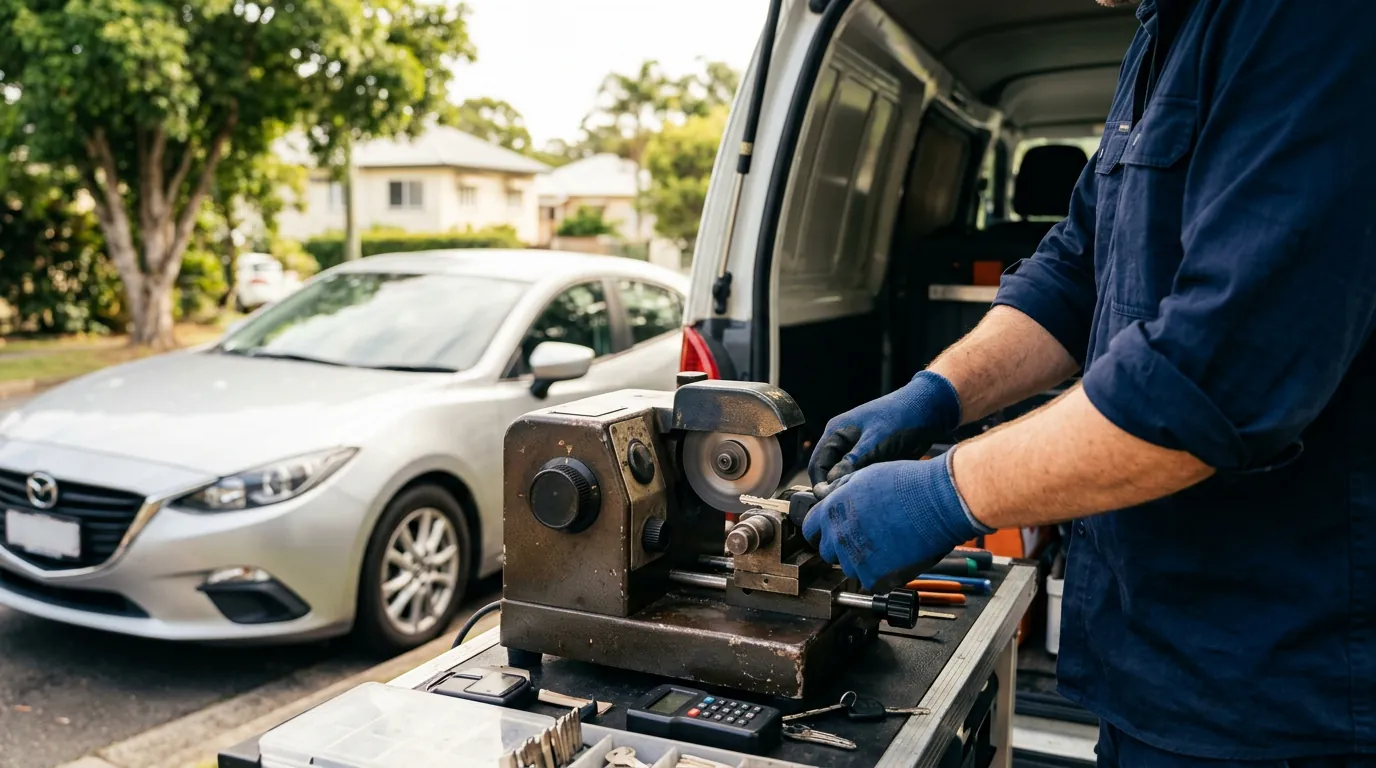
Transponder Keys, Smart Keys & Remotes: What Sydney Drivers Should Know
Maybe your spare key stopped starting the car even though the buttons still lock the doors. Maybe a locksmith asked whether your key was a transponder or a proximity key and you had no idea. Or maybe you're simply holding a chunky black fob and wondering what's actually inside it. Car keys have quietly become small computers, and understanding yours makes you a far better-informed owner.
This is a plain-English tour of how modern car keys work, from the humble metal blade to the push-button smart fob. No jargon for its own sake, just the knowledge that helps you look after your keys and know what to ask for when something goes wrong.
What is a car immobiliser and why does it matter?
To understand your key, you first need to understand the immobiliser, because the two work as a pair. An immobiliser is an anti-theft system built into your car that stops the engine from starting unless it receives the correct electronic signal. It's the reason a stranger can't simply cut a matching metal key and drive off.
When you turn the key or press start, a small chip in your key exchanges a coded signal with the car. If the code matches what the car expects, the immobiliser releases and the engine is allowed to run. If it doesn't match, the car may crank but won't start, or won't do anything at all. This handshake is at the heart of every key type from the mid-1990s onward, and it's why programming, not just cutting, is central to modern key work.
What are the main types of car keys?
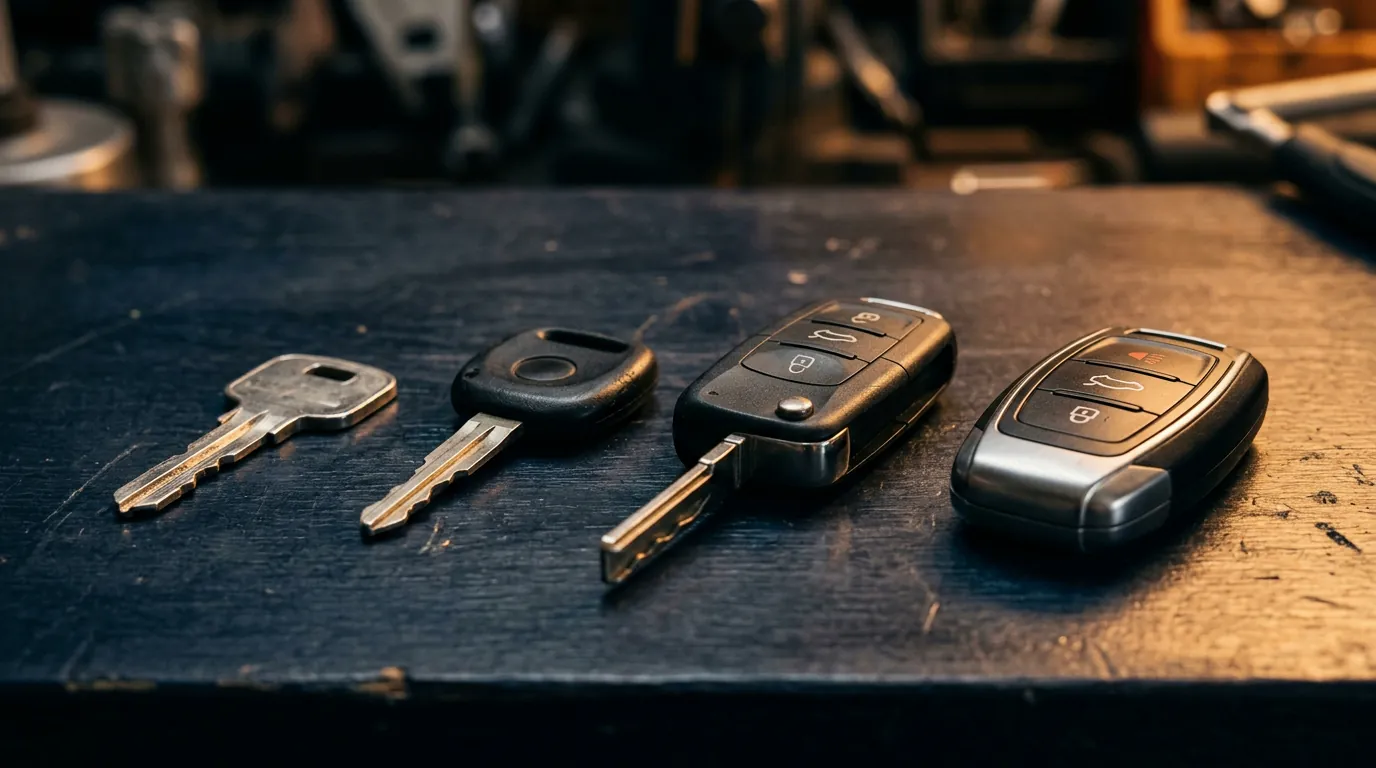
Car keys have evolved in fairly clear stages, and most vehicles on Sydney roads fall into one of four broad categories. Here's how they differ.
The basic mechanical key
This is the original: a plain metal key that turns a lock, with no electronics whatsoever. Generally found on vehicles built before the mid-1990s, it can be cut quickly by decoding the lock or copying an existing key. If you have a classic or a very old runabout, this is likely what you're holding. Simple, cheap to duplicate, but offering no electronic theft protection.
The transponder (chip) key
From roughly the mid-1990s, manufacturers embedded a tiny transponder chip in the plastic head of the key. The word transponder is a blend of transmitter and responder, which describes exactly what it does: it responds to a signal from the car with its own coded reply. There's no battery in the chip; it's powered wirelessly by the car when it's close to the ignition. This is why a transponder key must be both cut to fit the lock and programmed so the immobiliser recognises its code.
The remote or flip key
Next came the convenience of remote central locking built into the key. A remote key adds lock, unlock and sometimes boot buttons, powered by a small battery in the key body. A flip key is a popular variant where the metal blade folds away into the fob at the press of a button. Inside, it still contains a transponder chip for the immobiliser, so it needs both the remote functions and the chip programmed to work fully.
The proximity or smart key
The most recent step is the proximity key, also called a smart key or keyless-entry fob. You keep it in your pocket or bag; the car senses it nearby, unlocks as you grab the handle, and starts at the push of a button. Most still hide a small mechanical emergency blade inside for when the fob battery dies. These are the most sophisticated keys to replace or program, because the wireless system and security are considerably more complex.
One quirk worth knowing with proximity fobs: because the car is always listening for a nearby key, a fob left too close to the vehicle overnight, or one with a weakening battery, can occasionally cause odd behaviour like a car that won't recognise the key it recognised yesterday. It's rarely a fault with the car itself, and a fresh fob battery often settles it. If it doesn't, that's the point to have the key and immobiliser checked properly rather than guessing.
Why can't any key place just program my key?
It's a fair question. If it's just a code, why does it matter who does it? The answer is that programming a key means communicating with your car's specific security system, and that takes the right equipment, current software, and know-how for your make and model.
Different manufacturers use different immobiliser architectures, security protocols and diagnostic procedures, and these change from year to year. A professional auto locksmith invests in the diagnostic tools and software subscriptions needed to cover a wide range of vehicles, and keeps them updated. The wrong tool, or an out-of-date one, either can't complete the handshake or risks upsetting the car's electronics. This is exactly the expertise behind a proper automotive car key service, where the gear and training are matched to your specific vehicle.
It's worth adding that we won't publish how immobiliser security is bypassed or defeated, and neither will any reputable locksmith. Legitimate key programming works with your car's security, proving you own the vehicle first, not around it.
Why does having a spare key matter so much?
Here's the practical lesson that ties all of this together: a spare key is cheap insurance against an expensive, stressful day. When you have a spare, replacing a lost key is often a simpler and quicker job, because an existing working key can make adding another more straightforward on many vehicles.
When you have no working key at all, the locksmith has to start from your car's identity and, depending on the make, the process can be more involved. In other words, the best time to sort out a spare is while you still have a key that works, not after you've lost it.
- A spare means a lost key is rarely a full emergency; you can still drive while a replacement is arranged.
- Adding a spare while you hold a working key is frequently the simplest scenario for many vehicles.
- Keeping the spare somewhere separate and safe, not on the same ring, protects you if one set goes missing.
- Fob batteries fade over time; a maintained spare is a useful backup when the main one weakens.
If you've only got a single key for your car, think of a spare as a small, sensible bit of future-proofing. And if you've already lost your only key, our guide to lost car key replacement options in Sydney walks through exactly what happens next.
How do you know which key your car needs?
You don't have to work it out alone. Identifying the correct key type, chip and immobiliser system for your make, model and build year is core to what an auto locksmith does. Share your vehicle details and we'll confirm precisely what your car takes and what's involved in cutting or programming it.
What will a new or spare key cost?
Because the answer swings so much between a basic transponder and a proximity smart fob, a flat figure would be misleading. The fair approach is a free, no-obligation quote based on your actual vehicle. Tell us your make, model and year, and we'll explain your options clearly. Whether you want a spare cut before trouble strikes or need to understand your keyless system better, reach out for a free quote and we'll point you in the right direction.