Are Smart Locks Worth It in Brisbane's Climate? A Locksmith's Honest Take
You're standing at your front door with your arms full of shopping, fumbling for keys in the bottom of a bag, and the thought lands: surely there's a better way. Smart locks promise exactly that. But you've also heard stories about flat batteries, dropouts and gadgets that don't cope with a Queensland summer. So are they actually worth it here in Brisbane, or is a good old deadbolt still the smarter call?
As locksmiths who both install smart locks and get called out when they misbehave, we'll give you the honest, balanced version. Smart locks can be genuinely brilliant. They also have real limitations, and Brisbane's climate raises a couple of considerations worth thinking through before you buy.
What are the real advantages of a smart lock?
Let's start with why so many Brisbane households are making the switch. The benefits are real when a smart lock is chosen and installed well.
- No more fumbling for keys; a code, phone or fingerprint gets you in with your hands full.
- Keyless entry means no keys to lose, hide under the mat, or hand around and never get back.
- Temporary codes for cleaners, trades or guests that you can issue and revoke without cutting a single key.
- A log of who came and went and when, on models that support it, which is reassuring for busy households.
- Remote access on connected models, so you can let someone in or check the door is locked from your phone.
For families juggling kids, deliveries and short-stay guests, that convenience is not a gimmick. It genuinely changes how you use your front door. And if you run a short-stay rental anywhere from West End to the bayside suburbs, being able to issue a fresh code for each guest and retire it at checkout, without ever handing over a physical key, removes one of the biggest headaches of managing a place remotely.
How does Brisbane's humidity affect a smart lock?
Here's where local knowledge earns its keep. Brisbane's warm, humid, subtropical climate is tougher on door hardware than many people realise, and smart locks are electronics bolted to an exterior door.
Humidity, salt air closer to the bay, and big swings between air-conditioned interiors and muggy outdoor heat all put stress on seals and internal components. Timber doors, so common on Brisbane Queenslanders, also swell and shift with moisture through the year, which can throw out the alignment a motorised bolt relies on to throw smoothly. None of this makes smart locks a bad idea, but it does mean two things matter more here than in a drier climate: choosing hardware rated for outdoor and humid conditions, and getting the door and strike properly aligned so the lock isn't straining every time it operates.
What about wifi and connectivity?
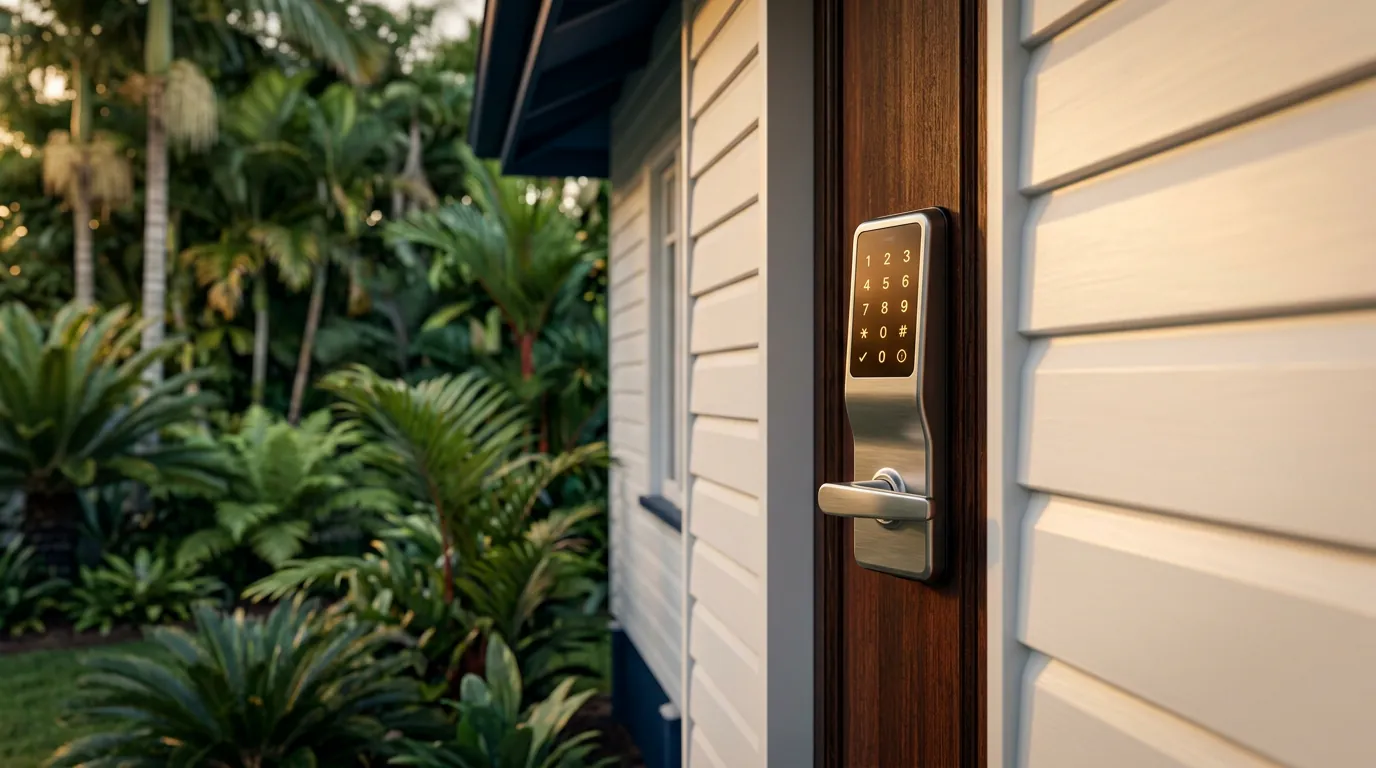
Not every smart lock needs wifi, and it's worth being clear about the difference. Many locks work perfectly well offline using a keypad code or Bluetooth from your phone at the door. Wifi or a hub is what adds remote features like unlocking for someone while you're across town. If your entryway sits far from the router or your connection is patchy, a lock that leans heavily on wifi may frustrate you, whereas a keypad-first model that treats connectivity as a bonus will be more dependable.
Should you retrofit or fully replace your existing lock?
This is one of the first practical decisions, and the right answer depends on your existing door hardware. There are broadly two paths.
The retrofit approach
A retrofit smart lock fits over or onto your existing deadbolt, often replacing only the interior thumb-turn while keeping your current external hardware and, in some cases, your existing keys. It's less invasive and can be a tidy option when your current deadbolt is sound. The catch is that it depends on your existing lock being compatible and in good working order.
The full replacement approach
A full replacement swaps the entire lock for a purpose-built smart unit, giving you keypads, readers or handle sets designed as a whole. It's the cleaner long-term result and often the better fit for older or worn hardware, but it's a larger job. Working out which suits your door is exactly the kind of thing our smart lock installation service assesses on-site, because the door itself usually decides the answer.
Which doors and hardware actually suit a smart lock?
Not every door is an easy candidate, and being honest about this saves disappointment. Smart locks are happiest on a solid, well-hung door with a standard bolt arrangement and a frame that's square and stable. Doors that stick, drop on their hinges, or have gaps that grow and shrink with the seasons will give any lock grief, and a motorised one will simply announce the problem sooner.
Before fitting a smart lock, a good locksmith checks the door swings and closes cleanly, the strike plate lines up, and the bolt throws without being forced. Sometimes a small adjustment or a bit of hardware repair first makes all the difference to how reliably the smart lock performs afterwards. This groundwork sits squarely within general residential locksmith work, and it's the unglamorous part that decides whether you love or curse your new lock.
What happens when the battery dies or the electronics fail?
This is the worry everyone raises, and it deserves a straight answer. Smart locks run on batteries, and yes, batteries eventually go flat. The reassuring part is that reputable smart locks are designed with this in mind.
- Most give clear low-battery warnings well before they die, often for weeks, so a flat battery rarely arrives without notice.
- Many keypad and fob locks include a mechanical key override or an emergency power contact so you're never truly locked out.
- Battery life varies widely by model and usage, but a good lock on fresh batteries typically lasts many months.
- Keeping a spare set of the right batteries in a kitchen drawer turns a potential drama into a two-minute fix.
The key principle we always stress is mechanical fallback. Choose a smart lock that still gives you a physical way in if the electronics ever fail, and you get the convenience without trading away your peace of mind.
So, are smart locks worth it in Brisbane?
Our honest take: yes, for a lot of households, provided you choose hardware suited to a humid climate, fit it to a door that's in good order, and insist on a mechanical fallback. Where people come unstuck is buying purely on features, then bolting a sensitive device onto a tired, misaligned door. Get those fundamentals right and a smart lock is a genuine daily upgrade. If home security is on your mind more broadly, our Brisbane home security checklist is a good companion read.
What does smart lock installation cost in Brisbane?
It depends on the lock you choose, your door, and whether it's a retrofit or a full replacement, so rather than quote a number blind we'll give you a clear picture up front. Tell us about your door and what you'd like the lock to do, and we'll provide a no-obligation free quote along with an honest recommendation, including whether a smart lock is even the right call for your setup. Reach out for a free quote and we'll help you decide with no pressure.