Master Key Systems for Brisbane Businesses: How They Work and Who Needs One
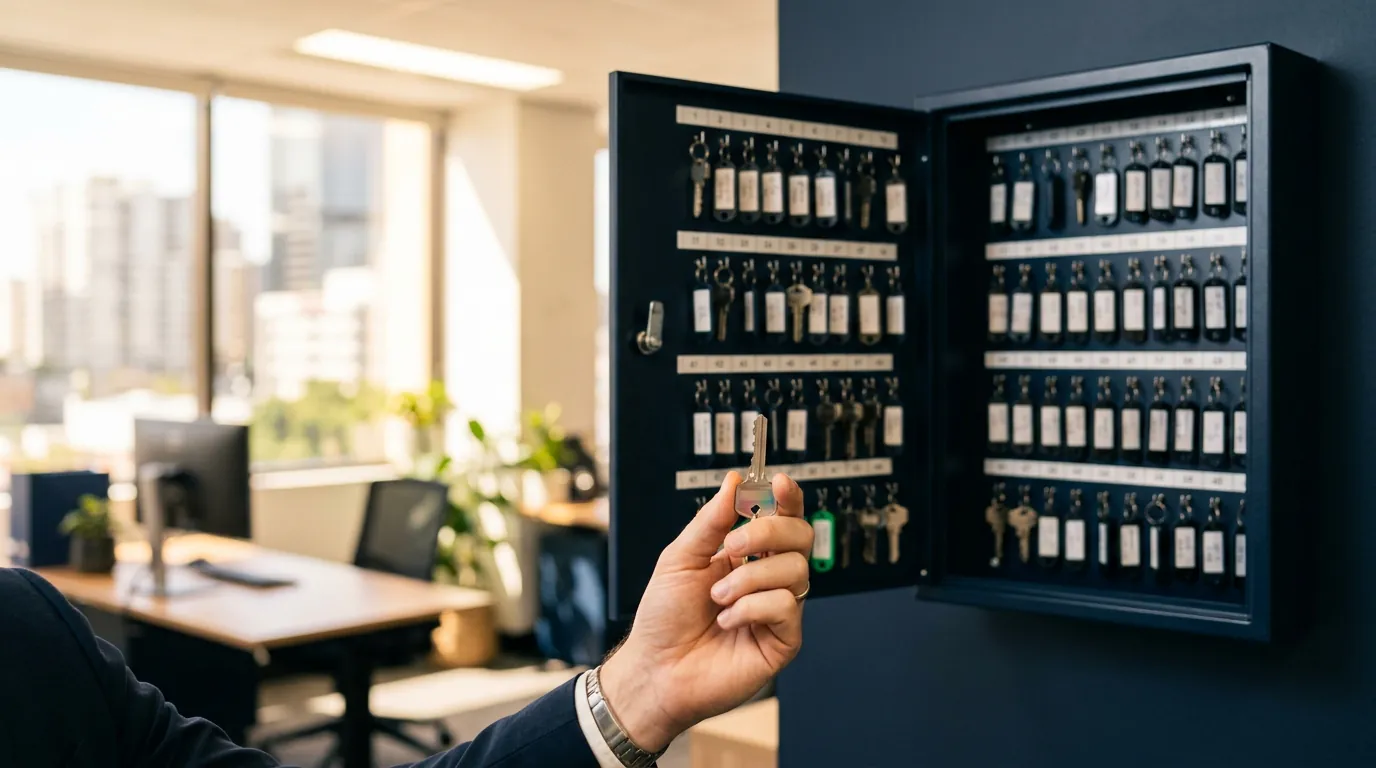
If you run a business, you know the quiet friction of keys. The cleaner needs the front door but not the server room. The manager needs everything except the safe. A team member leaves and you're suddenly wondering how many doors their key opened and whether you need to change every lock in the building. If that sounds familiar, a master key system is very likely the answer you've been missing.
This guide explains, in plain terms, how master key systems work, the different tiers of access they make possible, and how to decide whether your Brisbane business needs one. It's the difference between a bulging keyring per person and a clean, controlled hierarchy that actually reflects who should go where.
What exactly is a master key system?
At its simplest, a master key system is a set of locks designed together so that different keys open different combinations of doors. The clever part is in the engineering of the lock cylinders, which are built so that more than one key can operate a given lock, in a carefully controlled way.
In practical terms, that means each staff member can carry a single key that opens exactly the doors they need, no more, while a master key held by management opens many or all of them. Instead of everyone lugging a dozen keys, or worse, everyone holding a key to everything, access is shaped to match responsibility. It's the same principle whether you run a small office in Fortitude Valley or a multi-tenant building in the CBD.
How do master and grand-master hierarchies work?
Master key systems are built as a hierarchy, like an org chart for your doors. Understanding the layers helps you picture how access flows from the top down.
- Change key: the individual key at the bottom level, opening a single door or a small defined group. This is what most staff carry.
- Master key: opens all the doors within a department, floor or defined zone. Handy for a supervisor or facilities manager responsible for that area.
- Grand master key: sits above multiple master keys, opening everything across several zones or departments at once.
- Great grand master key: the top tier used in larger or multi-building setups, opening every master and grand-master group beneath it.
Most Brisbane businesses only need two or three levels, but the framework scales neatly as an organisation grows. The design work up front is what makes it robust: a locksmith plans the hierarchy so each door opens for the right keys and stays shut to the wrong ones, which takes careful planning to get right.
It's worth spending a moment on why that planning matters so much. Every door and every key in the system has to be worked out together as one puzzle, so that the master opens what it should while each change key stays strictly limited to its own doors. Get the design right and the system quietly does its job for years; rush it, and you end up with awkward gaps where a key opens something it shouldn't, or a door that stubbornly refuses the very key meant to open it. This is precisely why a master key system is engineered rather than simply bought off a shelf.
What are restricted keys and why do they matter?
Here's a detail that catches many business owners out. A standard key can be copied at almost any hardware shop or kiosk. That means a departing employee, or anyone who borrowed a key for an afternoon, could have quietly cut a copy, and you'd never know.
A restricted key system solves this. Restricted, or patent-protected, keys can only be cut by the authorised locksmith holding the design, and only on your written authority. In practice, that means keys can't be duplicated behind your back at the local kiosk, you control exactly who is allowed to request a copy, and you keep a clear record of how many keys exist and who holds them. For any business serious about security, this control over duplication is often the single biggest reason to move to a professionally designed system rather than off-the-shelf locks.
Who actually needs a master key system?
Master key systems suit any organisation where different people need different levels of access, which covers a huge range of Brisbane businesses. A few common examples make it concrete.
- Offices with mixed staff, contractors and cleaners who each need some areas but not others.
- Strata and multi-tenant buildings, where tenants access their own suite plus shared common areas but nothing else.
- Retail and hospitality, separating the shop floor, stockroom, office and back-of-house.
- Warehouses and trades, controlling access to storage, plant rooms and yards.
- Medical, allied health and professional suites where sensitive rooms and records need tighter control.
If you recognise your business in that list, a properly designed system will likely make your daily operations simpler and your security tighter at the same time. Designing and installing these is core commercial locksmith work, and it starts with understanding how your people actually move through your premises.
What happens when a staff member leaves?
Staff turnover is the moment a good access system proves its worth. When someone leaves and their key isn't returned, or you simply can't be sure a copy wasn't made, you need to close that gap without re-keying your entire building.
A well-designed master key system lets a locksmith rekey the affected locks so the old key no longer works, while issuing new keys that still fit within the existing hierarchy. On a restricted system, the risk of an unauthorised copy is far lower to begin with, because that key couldn't be duplicated without your say-so. Either way, the goal is the same: retire the lost access cleanly and keep everyone else working. This targeted rekeying is far more efficient than replacing hardware wholesale.
Mechanical master keys or electronic access control?
A fair question in 2026 is whether mechanical keys still make sense when electronic access control exists. The honest answer is that both have their place, and often the best solution blends them.
Mechanical master key systems are proven, need no power or network, never suffer a flat battery or a dropped connection, and carry no ongoing subscription. Electronic access control, whether keypads, cards, fobs or app-based systems, adds an audit trail, the ability to change permissions instantly, and time-based access, all without cutting a single key. Many Brisbane businesses run a hybrid, using mechanical master keying for the bulk of the building and electronic control on a handful of sensitive or high-traffic doors. If electronic access is where you're leaning, our work with smart locks and access control covers those options too, and we're happy to talk through the trade-offs honestly rather than push you toward the pricier path by default.
How do you get a master key system designed for your business?
It begins with a conversation about your premises, your people, and how access should be structured, followed by a locksmith mapping the hierarchy and recommending the right hardware. Because every business is laid out differently and the number of doors and tiers varies enormously, a genuine quote comes after understanding your needs, not before.
If you're weighing up a master key or restricted system for your Brisbane business, reach out for a free quote. We'll assess your site, explain your options in plain language, and design a system that fits how you actually work, with no obligation and no pressure.