Locked Out in Brisbane? Here's Exactly What to Do (and What Not to Do)
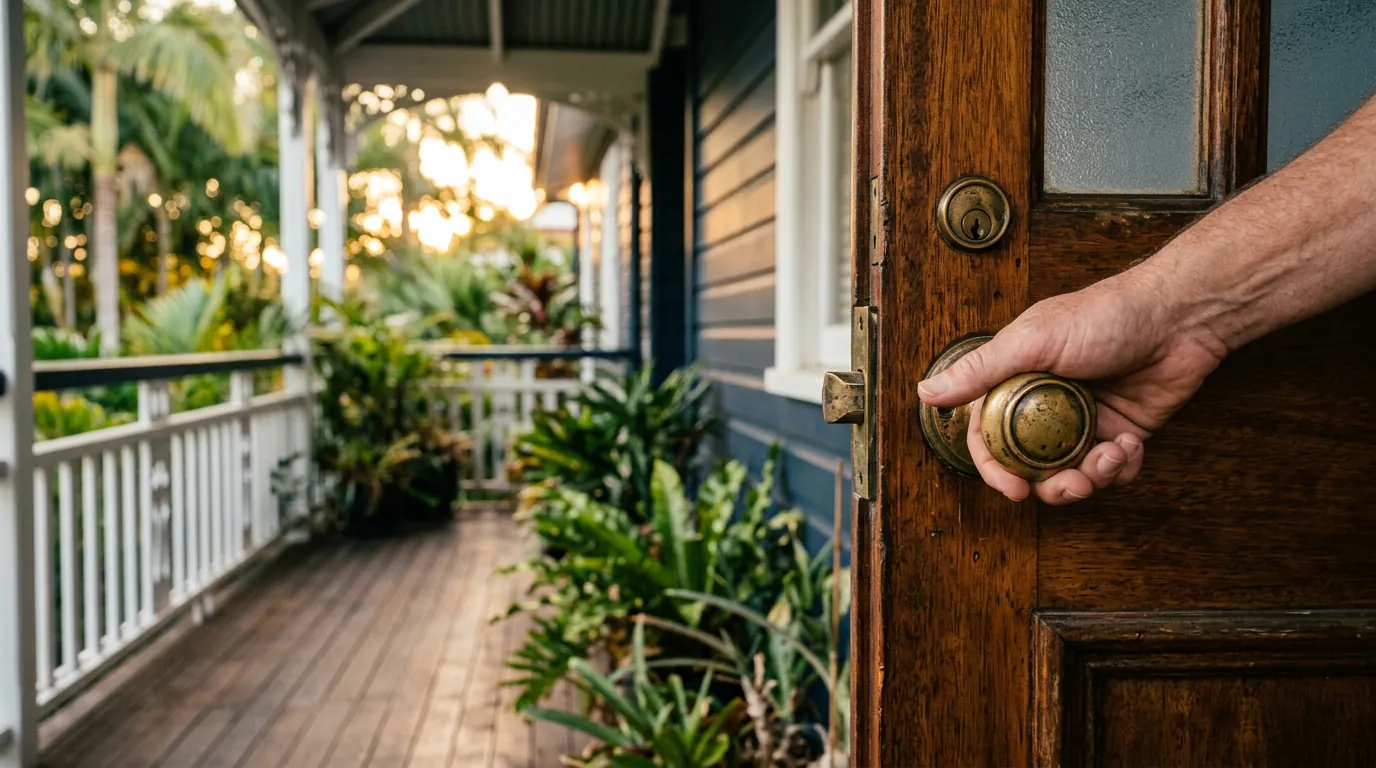
You're standing on the front step, the door has clicked shut behind you, and your keys are sitting on the kitchen bench where you left them. Maybe the baby's still asleep inside, maybe the roast is in the oven, and maybe it's thirty-four degrees with no shade in sight. First, take a breath. A lockout feels like a disaster, but it's one of the most common and most fixable calls we get across Brisbane every single day.
This guide walks you through exactly what to do the moment you realise you're locked out, why forcing the door is almost always the wrong move, and how a professional gets you back inside without wrecking your hardware. Read it now, save it for later, and you'll never feel helpless on your own doorstep again.
Are you and everyone else actually safe?
Before anything else, do a quick safety check. Is there a child, an elderly relative, or a pet locked inside on a hot day? Is there something cooking on the stove or in the oven? Brisbane summers are unforgiving, and a closed-up house heats fast. If anyone inside is at genuine risk, this stops being an inconvenience and becomes an emergency, so call 000 first, then a locksmith. If everyone's safe and it's just you on the wrong side of the door, you've got time to handle this calmly and without spending more than you need to.
How did you get locked out in the first place?
Knowing the cause helps a locksmith arrive with the right tools, and it helps you avoid a repeat. Most Brisbane lockouts fall into a handful of familiar patterns:
- A self-locking deadlatch (the common 'night latch' on many Queenslander and unit doors) that snibs shut the instant the door closes behind you.
- Keys left inside, on the bench, in a bag, or still sitting in the back of the lock.
- A snapped or bent key, often the sign of a worn lock or a key that's been copied one too many times.
- A jammed or seized lock, especially on older mortice locks that have swollen or corroded in our humidity.
- A lost or stolen set of keys, which is a security problem as much as an access one.
If your key turns but the door won't open, or the key won't go in at all, mention that when you call. It tells us whether we're dealing with a simple lockout or a genuine lock failure, and that changes what we bring.
Should you try to force the door or climb through a window?
This is the big one, so we'll be blunt: don't. We understand the temptation to shoulder the door, jemmy a window, or slide a card down the frame like in the movies. In real life those attempts almost always end one of three ways: a splintered door jamb, a cracked window and a nasty cut, or a bent lock that now needs full replacement instead of a simple opening. Forcing entry turns a quick, tidy job into a repair bill for a door, a frame, a lock, and sometimes a trip to hospital. Timber Queenslander doors and aluminium-framed sliding doors are particularly easy to damage and expensive to make good.
Climbing through a window is worse. Every year people fall from decks, stairs and second-storey windows trying to get back into their own homes. A locked-out afternoon is annoying; a broken wrist is a genuinely bad day. If a neighbour kindly offers a ladder, thank them and wait for a professional instead.
What is non-destructive entry, and how does a locksmith get in?
Non-destructive entry is exactly what it sounds like: opening your door without damaging the door, the frame, or in most cases the lock itself. A licensed locksmith uses specialised professional tools and training to manipulate the mechanism so the lock simply opens as if you'd used your key. We won't publish the how-to here, and no reputable locksmith ever will, because those same techniques in the wrong hands are exactly what home security is meant to defend against. That's precisely why it's a licensed trade.
In the large majority of residential lockouts, we're back inside without so much as a scratch on your hardware, and your existing keys keep working afterwards. On the rare occasion a lock is already broken, seized, or a high-security type that must be drilled, a good locksmith will tell you before touching anything and talk you through the options first.
What information should you have ready when you call?
A two-minute phone call gets help moving faster. Have these handy:
- Your exact address and the best access point (front, rear, side gate, unit number, building entry code).
- What type of door and lock it is if you know: timber or glass, a knob, a deadbolt, a mortice lock, a sliding door, or a smart lock.
- Whether anyone or any pet is inside, and whether anything is cooking or running.
- Whether you have ID or some proof you live there, which a locksmith will reasonably ask for before opening a home.
- Whether the key is lost (a security concern) or simply inside (a straightforward opening).
On that last point, yes, expect to prove it's your place. A trustworthy locksmith checks, because opening a stranger's door on request is exactly what an honest tradesperson won't do.
When is a lockout a genuine after-hours emergency?
Most lockouts can wait the short time it takes a locksmith to reach you. Some can't. Treat it as urgent, and say so when you call, if a child or pet is shut inside, if someone inside needs medical help, if the stove or oven is on, if you're stranded somewhere unsafe late at night, or if your keys were stolen and someone could now access your home. For those situations, an emergency locksmith is available around the clock across Brisbane, and getting you back inside quickly is the whole job.
What should you do once you're back inside?
If you were simply locked out with your keys on the bench, you're done, though it might be worth thinking about a spare with a trusted neighbour or a small key safe for next time. If your keys were lost or stolen, don't stop at getting the door open. Any lock those keys fit is now a question mark. The fix is usually straightforward: a locksmith can rekey your existing locks so the old keys no longer work, or replace hardware that's worn or dated. Our residential locksmith team handles exactly this, often in the same visit.
A repeated lockout is worth investigating too. A deadlatch that keeps snibbing itself, a key that's getting harder to turn, or a door you have to lift and shove all point to hardware that's wearing out or a door that's moved in its frame, which is common in Brisbane's climate. Sorting it now beats another call from the doorstep.
Once you're back in and settled, it's a good moment to look at the bigger picture. Our locksmith's guide to burglar-proofing your Brisbane home walks through the small hardware upgrades that make the biggest difference to how secure your place actually is.
Locked out right now, or want to talk through your options once you're back inside? UrgentKey Services covers Brisbane around the clock with fast, non-destructive entry and honest advice, no damage where we can avoid it and no surprises. Get in touch any time for a free quote and we'll get you sorted.