Why Brisbane's Humidity Wrecks Your Locks (and How to Prevent It)
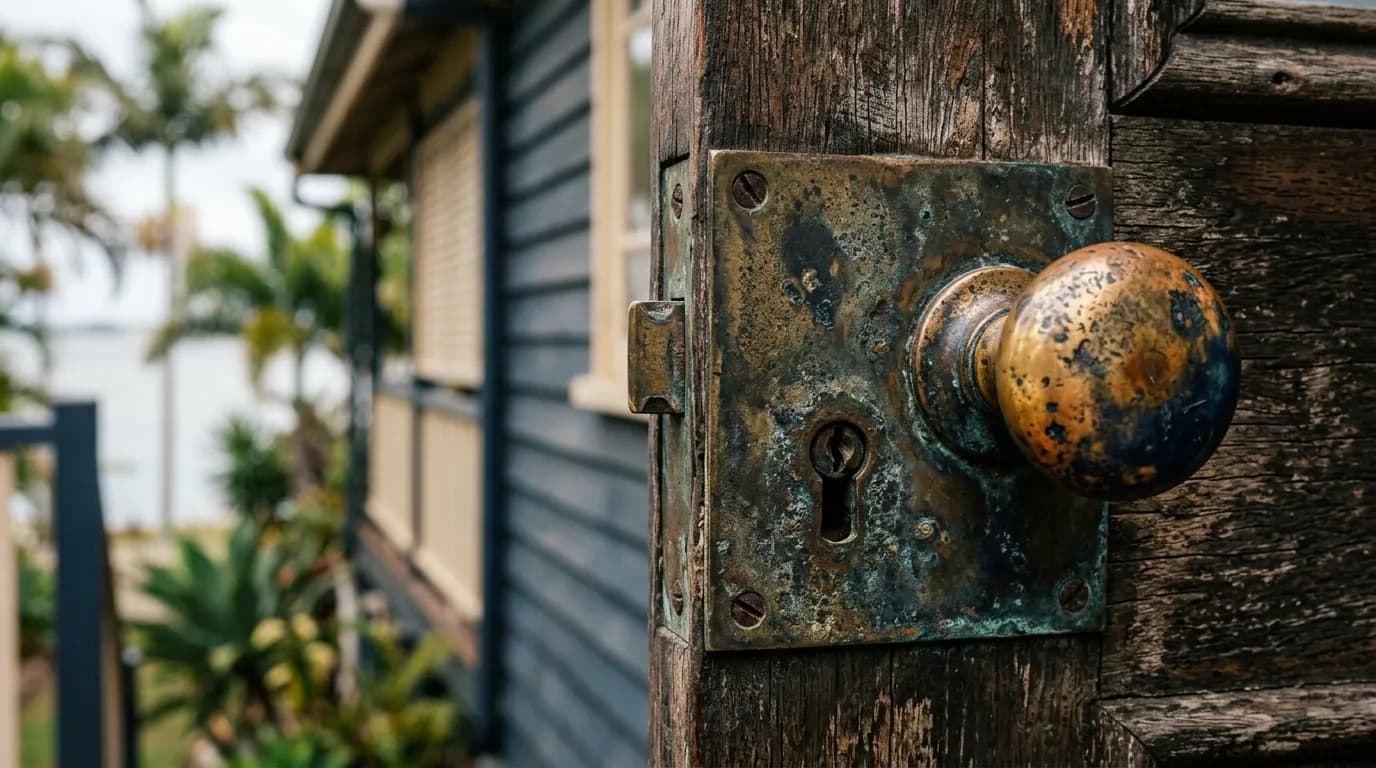
There was a time your key slid in and turned like it was buttered. Now it needs a jiggle, a lift of the handle and a shoulder against the door to get the bolt to move. If that sounds like your place, you're not imagining it, and you haven't done anything wrong. You just live in Brisbane, and our subtropical climate is quietly tough on locks.
Sticky, stiff and seized locks are one of the most common problems we're called out for, and they're very often preventable. Understanding why it happens here specifically, the humidity, the salt air, the swelling timber, is the key to keeping your locks smooth for years instead of replacing them every couple of seasons. Here's what's really going on inside your door, and what to do about it.
Why does Brisbane's climate wreck locks in the first place?
It comes down to three local culprits working together: moisture in the air, salt where you're near the bay, and the fine grit that both of them help trap inside your hardware. Each one attacks a lock differently.
How does humidity make a door stick?
Timber is hygroscopic, meaning it drinks moisture straight out of the air. Through a humid Brisbane summer and wet season, solid timber doors and their frames swell as they absorb that moisture, then shrink again when things dry out. As the door grows even a couple of millimetres, it no longer sits square in its frame. Suddenly the deadbolt doesn't line up with its strike, the latch drags against the plate, and you're lifting and shoving the door to force everything to meet. People often blame the lock, but the lock is fine; it's the door that's moved. You'll usually notice it comes and goes with the seasons, worse in the muggy months and easier in winter.
What does salt air do to a lock, especially near the bay?
If you're out at Wynnum, Manly, Redcliffe, Sandgate or anywhere close to Moreton Bay, add salt to the mix. Salt-laden air is corrosive, and it works its way into the moving metal parts of a lock: the springs, the pins, the bolt and the internal levers of older mortice locks. Over time it forms corrosion and a gritty film that stiffens everything up, and eventually a spring weakens or a component seizes entirely. Bayside homes and their locks simply age faster than those a few suburbs inland, and older brass and steel mortice hardware is especially vulnerable.
How does dust and grime get in there?
Every lock breathes dust and pollen in through the keyway. On its own that's slow, but the moment moisture, or worse, the wrong lubricant, gets involved, that dust turns to a sticky paste that grinds against the pins and clogs the mechanism. This is exactly why the lubricant you choose matters so much, which we'll come to.
Is it the lock or the door? How can you tell?
Before you touch anything, do one simple test: open the door fully and operate the lock with the door swung open. Turn the key and throw the bolt in mid-air, with nothing for it to line up against.
- If the key and bolt work smoothly with the door open but stick when it's closed, the problem is alignment; the door has swollen or dropped, and the bolt is fighting the strike plate.
- If the key is stiff or gritty to turn even with the door open, the problem is inside the cylinder: dust, corrosion or a lubrication issue.
- If the handle is loose, drooping or has to be lifted to work, it's usually worn hardware or hinges that have sagged.
That thirty-second test tells you whether you're looking at a door problem or a lock problem, and it saves you from lubricating a cylinder that was never the issue.
How do you actually maintain a lock in this climate?
Good lock maintenance in Brisbane is simple, cheap and mostly about doing the right small things, and avoiding one very common mistake.
What lubricant should you use, and what should you never use?
This is the big one, so remember it: do not use oil or WD-40 in a lock cylinder. It's the most common mistake we see, and it feels right because the lock frees up for a day or two. The problem is that oily wet lubricants are magnets for exactly the dust and grit that Brisbane's air is full of. Within weeks that oil has turned to a gummy, gritty sludge that jams the mechanism far worse than before, and it's a genuinely unpleasant job to clean out.
What locks actually want is a dry lubricant: powdered graphite, or a dry PTFE (Teflon-based) spray. These lubricate the pins and cam without leaving a tacky film for dust to cling to. A tiny puff of graphite into the keyway, then working the key in and out a few times, is all a healthy cylinder needs. For the bolt and latch mechanism, a dry film lube does the same job without the mess.
How do you keep the door itself aligned?
Since so many Brisbane lock complaints are really door complaints, keep the door moving true:
- Check and tighten hinge screws once or twice a year; a sagging door throws the bolt out of line.
- Keep the door's finish sealed, because a well-painted or sealed edge absorbs far less moisture and swells less.
- Clear the strike plate and check the bolt drops cleanly into it; a strike can be adjusted or filed slightly to suit a door that's moved.
- Wipe external hardware down now and then, especially bayside, to keep salt from building up on the surface.
What can a locksmith do that you can't?
Home maintenance handles the day-to-day, but there's a point where a lock needs proper attention. A locksmith can strip and service a cylinder, replace the tired springs and worn pins that dry lube can't fix, free off a seized mortice lock or judge when it's beyond saving, and re-adjust or re-cut a door and strike so everything lines up in every season. On corroded bayside hardware in particular, an experienced eye can tell the difference between a lock that'll come good with a service and one that's living on borrowed time.
When is it time to rekey or replace rather than maintain?
Maintenance has limits. Once corrosion has reached the internal components, once a key has snapped in a worn cylinder, or once a mortice lock has seized despite a service, you're better off replacing the hardware than nursing it, because a lock that's fighting you is a lockout waiting to happen. It's also the natural moment to upgrade to a new, well-sealed lock brought onto the same key as your other doors. If you're not sure whether your hardware has a service left in it or has reached the end, our lock rekeying and replacement team can assess it and give you a straight answer.
How often should you service your locks in Brisbane?
For most homes, a light once-over twice a year does it, and the smartest time for the main service is heading into the wet season, before the humidity peaks and the doors start to swell. Bayside homes exposed to salt air benefit from a slightly closer eye, particularly on older mortice locks. Build it into the same routine as testing your smoke alarms and you'll rarely be caught out by a lock that's seized overnight.
If your locks are already past the point of maintenance, it's worth knowing your options before you spend. Our guide on whether to rekey or replace your locks breaks down the difference and when each one makes sense.
Fighting a sticky lock or a door you have to shoulder every morning? Don't wait for it to seize completely. UrgentKey Services services, repairs and replaces locks right across Brisbane and the bayside suburbs, and our residential locksmith team can have yours turning smoothly again. Get in touch any time for a free quote.